
The momentum of AI is real — and so is the pressure to keep up. Companies need to deliver, but when you move fast, you sometimes break things. The challenge for business leaders today is to gain speed but avoid the breaks.
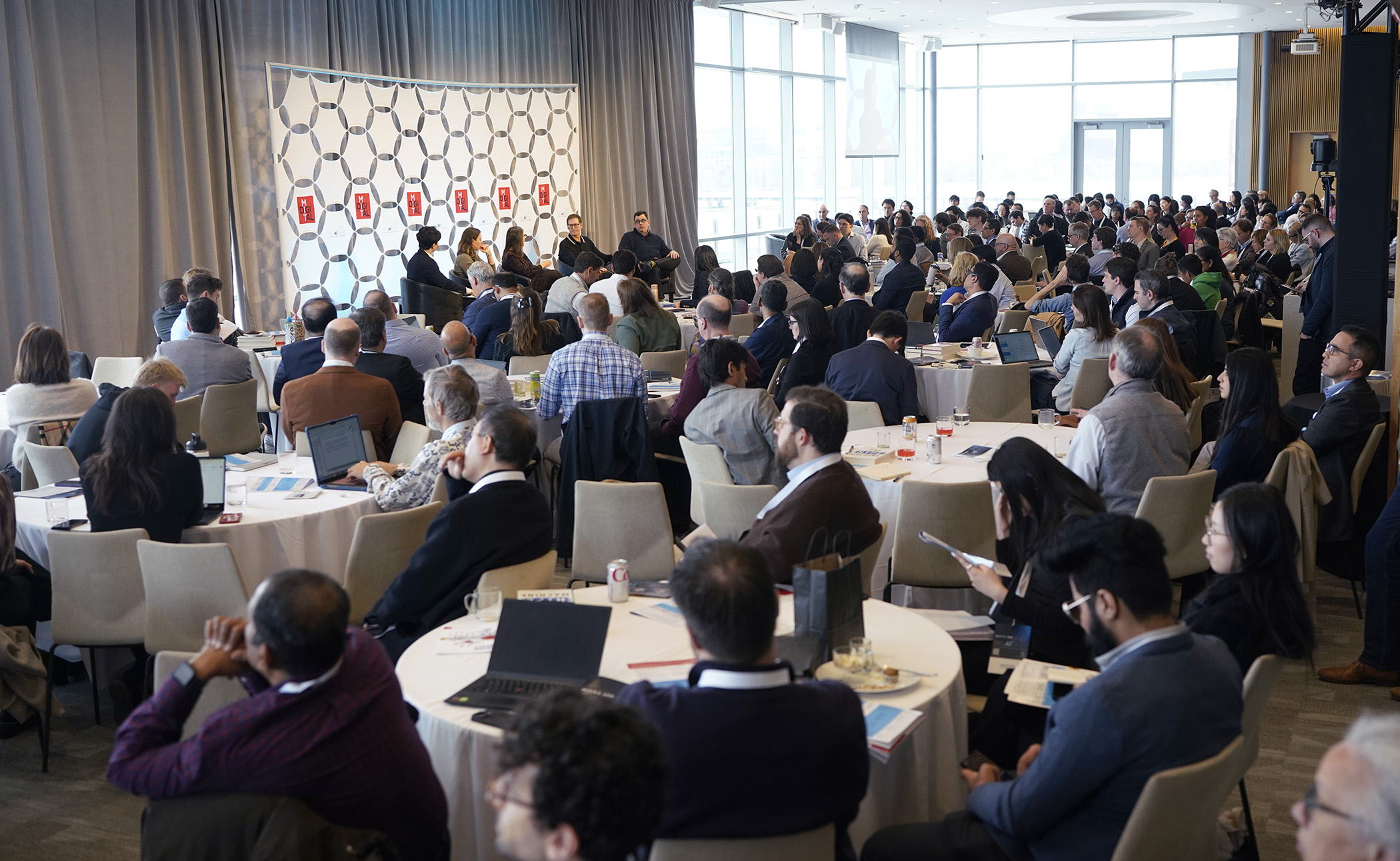
That tension between demand for speed and wanting to get AI right was at the center of The Business Implications of Generative AI (BIG.AI@MIT) conference in early April. Hosted in Cambridge, Mass., by the MIT Initiative on the Digital Economy, the event brought together corporate executives, economists, venture capitalists and academic researchers for two days of fireside chats, panels and parallel research sessions.
More than 300 attendees gathered to ask questions that are top-of-mind right now: Where is AI creating value? Which aspects of AI should organizations handle differently? And what are the benefits—and potential risks—of advancing AI quickly?
Three Big Takeaways from BIG.AI@MIT 2026
1. AI adoption is a problem of management, not technology.
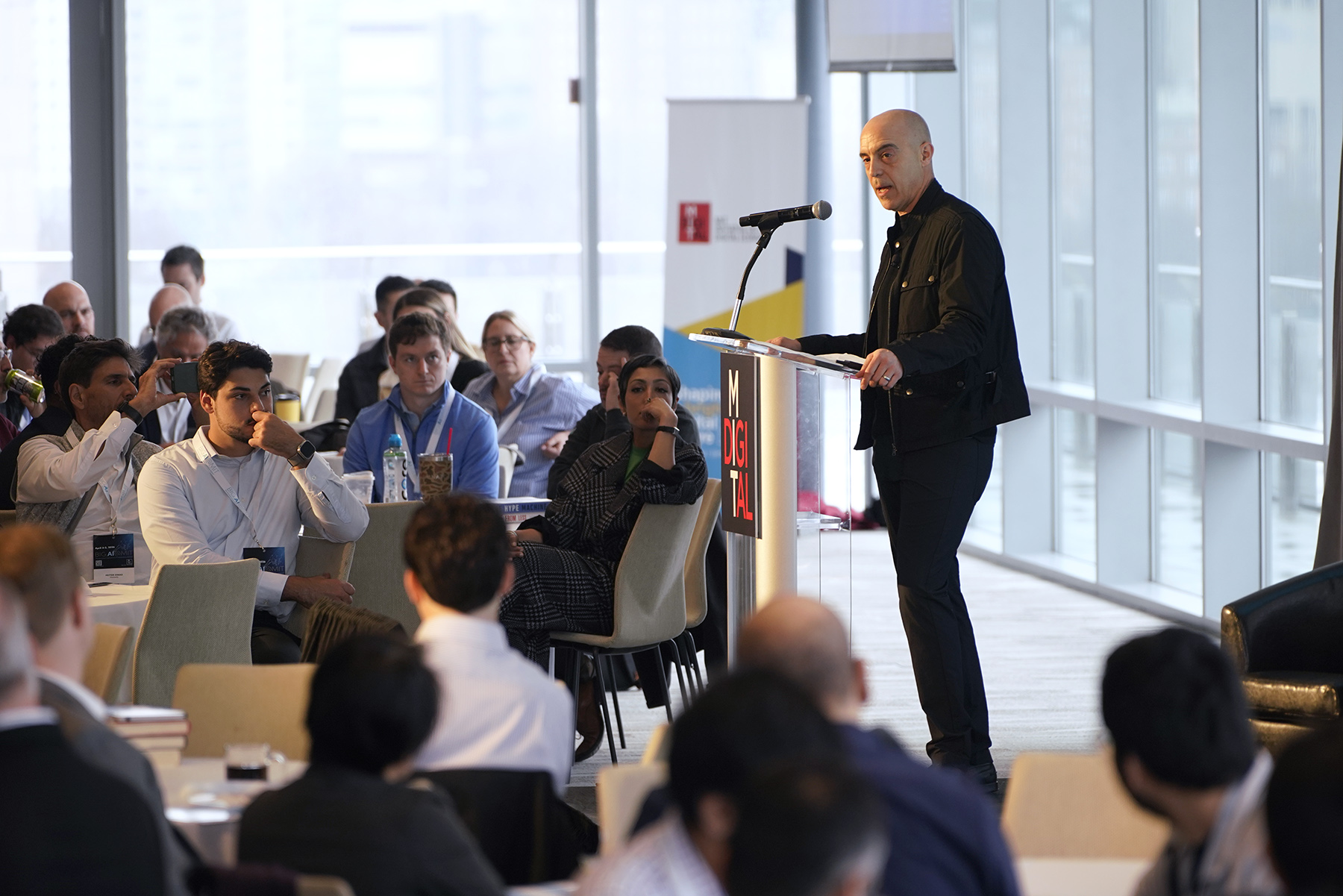
The conference’s first panel discussion tackled one of today’s biggest misconceptions. Namely, that AI adoption isn’t about selecting the right tech tools or platforms, it’s about designing the right process, then keeping humans in the loop.
Jim Wilson, Global Managing Director of Technology Research at Accenture, outlined a management playbook he’s seen work across industries:
- Start with process redesign, not just automation.
- Run human-centered experiments.
- Invest in governance.
- Build an underlying data infrastructure.
- Invest as much or more in human skills as in the technology itself.
“Each of those five principles is a human-led activity,” Wilson said. “This is not simply about uploading a new version of Claude … into your company’s systems kind of passively. Active human involvement, human agency, asking feedback from workers and leadership taking a stake in this is really critical. And we’ve seen that pretty consistently from the companies that are getting it right and are actually driving results from their AI systems.”

Julia Neagu, now an AI researcher at Databricks following the acquisition of her company Quotient AI, echoed that point from an AI builder’s perspective.
“There’s definitely an expectation that AI works like magic,” said Neagu. “They can just onboard it within your organization or among your teams and it will just work. And that’s just not how things happen in practice.”
While she’s seen the most success in AI coding, for other tasks, the lift is greater.
“Pretty much every other use case out there, they just require a lot more onboarding, a lot more process, a lot more governance.”
Insight to bring back to the office: The ROI question shouldn’t be “Which AI tool should we buy?” Instead, managers should ask “Are we organized to adopt AI well?”
2. Most companies are in the J-curve dip, they just don’t know it.
Why are so many AI investments not yet paying off? To help answer that question, the same panel, “Generative AI in Practice,” surfaced a useful framework.
Watch their conversation, “Generative AI in Practice,” in its entirety on the MIT IDE YouTube channel.
Wilson of Accenture offered the J-curve, which shows how companies investing in AI are in a temporary productivity dip. That’s not because AI isn’t working, he said, but because the organizational transformation required to unlock AI’s value will take time, resources and effort that don’t show up immediately in output metrics. In other words, AI-driven productivity dips before it rises.
From a historical perspective, this isn’t surprising, added Ernie Tedeschi, Chief Economist at Stripe. We are in very early stages of adoption. He noted that many people incorrectly treat the period since ChatGPT’s launch in late 2022 as the start of AI’s economic impact.
“That’s not even the first scene of AI,” Tedeschi argued. “That’s like the orchestra warming up before the overture.”
Insight to bring back to the office: Leaders feeling pressure from boards to show near-term AI returns can use the J-curve to frame that conversation and ask for patience.
3. Human skills aren’t going out of style; in fact, they’re becoming the competitive edge.
During the conference’s final panel discussion, a surprising theme emerged: As AI takes on more tasks, distinctly human skills become more valuable, not less. Creativity, judgment, accountability and the ability to connect with other people aren’t soft skills on the margins. In a world where AI handles execution, they become the work itself.
Laura Burkhauser, CEO of Descript said that as AI agents replace junior roles built around executing orders, Descript needs people who can serve as the AI agent’s boss.
“(We look for people) who can think like an engineer or designer,” Burkhauser explained. “Someone who’s able to hold a lot of context and translate that context to an agent, oversee the way the agent is using that context and drive it when it’s (going) the wrong way.”
Insight to bring back to the office: Don’t just ask what AI can do. Also consider what kind of people and structures you’ll need to make the most of it.
AI Adoption, Agents and Keeping Humans in the Loop
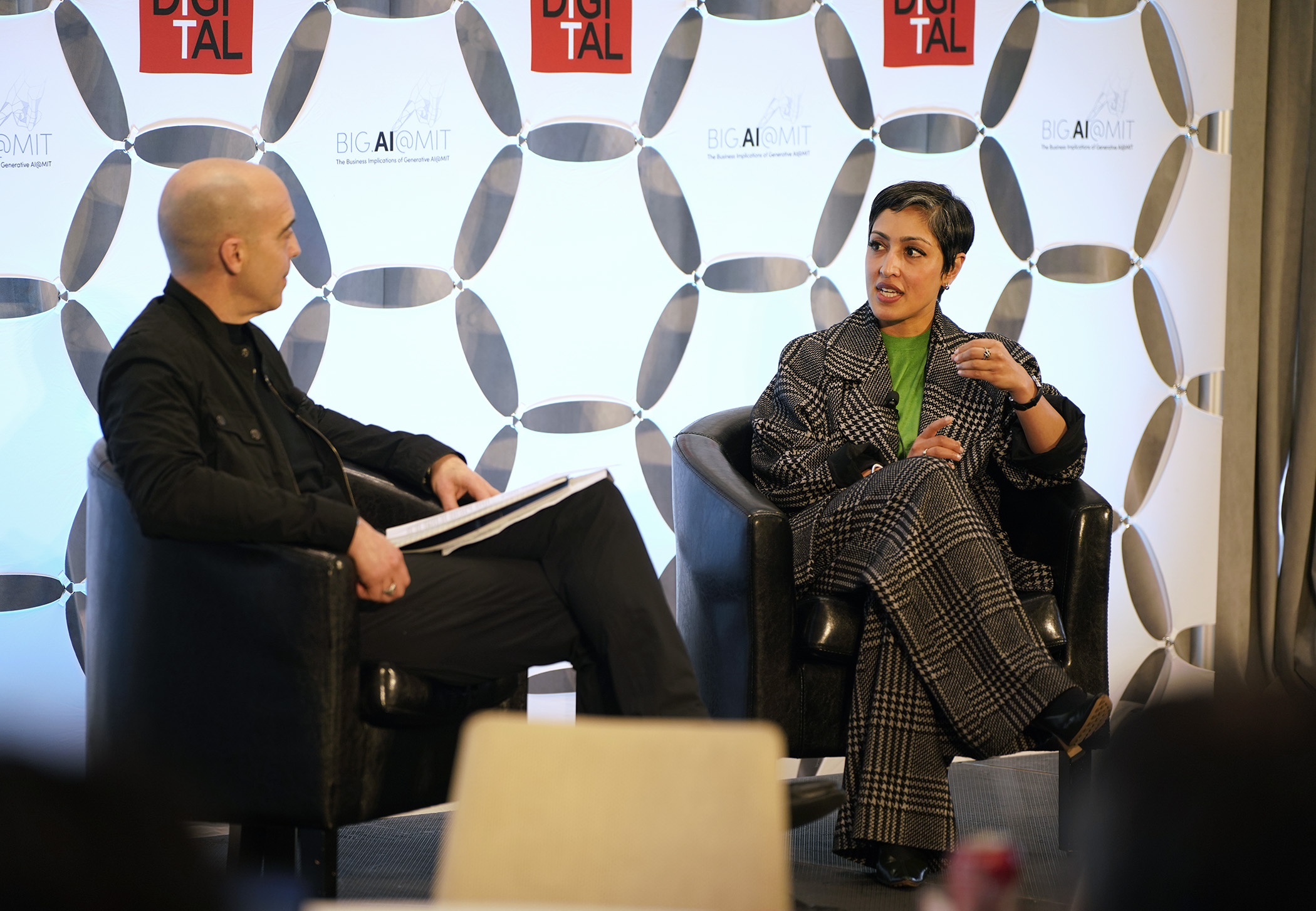
The panels and fireside chats at BIG.AI@MIT gave attendees a chance to go deep with the founders, investors, economists and researchers who work with AI every day.
Responsible AI and Serving the Public Interest – Fireside Chat
Moderated by Sinan Aral, Director, IDE
Guest: Rumman Chowdhury, CEO & Founder, Humane Intelligence Public Benefit Corp.
Chowdhury, a computer scientist, AI accountability researcher and founder of Humane Intelligence, joined IDE Director Aral for the opening fireside chat. Their conversation covered AI accountability, responsible development, and what it takes to build AI systems that actually serve the public interest.
Generative AI in Practice: How It’s Reshaping Products, Work and Organizations – Panel
Moderated by Harang Ju, Assistant Professor, Johns Hopkins University; and Digital Fellow, IDE
Panelists:
- Nicole Immorlica, Researcher, Microsoft Research; Professor, Yale University
- Julia Neagu, CEO, Quotient AI (recently acquired by Databricks)
- Ernie Tedeschi, Chief Economist, Stripe
- James Wilson, Global Managing Director of Technology Research, Accenture
This panel tackled what happens when Generative AI moves from pilot to production. Panelists drew on their experiences building, deploying and evaluating GenAI at scale. The discussion surfaced hard questions, like how to evaluate AI performance fairly? How to manage rapidly rising token costs? What does it mean to design for “collaborative intelligence” rather than substitution?
Several themes emerged:
- GenAI deployment is fundamentally a challenge of people and process.
- Governance and data infrastructure matter as much as the AI model itself.
- When it comes to the human side of GenAI transformation, organizations are investing far too little.
Building AI That Works for People – Fireside Chat
Moderated by Sinan Aral, Director, IDE
Guest: Rana el Kaliouby, Co-founder and Managing Partner, Blue Tulip Ventures
El Kaliouby is a computer scientist, founder of Affectiva (acquired by Smart Eye), and now a venture capitalist focused on human-centric AI. She brought her career arc to bear on a wide-ranging conversation about what it means to build AI responsibly at scale. El Kaliouby also reflected on what it means to humanize AI, citing examples from healthcare, humanoid robotics and relationship-intelligence tools.
Topics included:
- AI augments rather than replaces human potential.
- AI wealth creation risks becoming a “boys club” that widens the gender gap in tech.
- The emergence of AI coworkers will require org charts to evolve.
What Being Human Means in the Age of AI – Fireside Chat
Moderated by Sinan Aral, Director, IDE
Guest: Esther Dyson, Author, Term Limits: Time and Scale in the Age of AI (forthcoming from MIT Press)
Dyson — a journalist, tech investor and author of a forthcoming book — joined Aral for the conference’s most philosophically ambitious session. They explored the contrast between AI’s timeless, infinite scale, the finite nature of human life, and what that contrast reveals about being human when software intelligence becomes abundant and cheap. Dyson also presented a new economic metric, the GDVP (short for Gross Domestic Value Produced) as a way to reorient how society accounts for productivity enabled by AI.
Key themes:
- Don’t confuse what’s merely measurable with what’s actually valuable.
- Beware of “cognitive offloading,” or what we lose when we outsource struggle to AI.
- Organizations, projects and even phases of technology should eventually end, rather than persist indefinitely.
What Comes Next? Economic Futures in the Age of Generative AI – Panel
Moderated by David Holtz, Assistant Professor, Columbia Business School; Fellow, IDE
Panelists:
- Laura Burkhauser, CEO, Descript
- Avi Goldfarb, Rotman Chair of AI and Healthcare, Professor of Marketing, University of Toronto
- Annie Liang, Associate Professor, Northwestern University
- Rudina Seseri, Founder & Managing Partner, Glasswing Ventures
The closing panel looked at a longer arc: How is AI reshaping organizational structures, labor markets and economic value-creation?
The discussion pushed back on the “task automation” framing of AI’s impact. Panelists argued that the more fundamental shift is at the systems level: namely, how organizations are structured, how decisions get made, and how value is distributed.
The group also explored the human skills that become more valuable in an AI-augmented world: creativity, judgment, accountability and iconoclasm. Also discussed were the governance and trust barriers slowing enterprise adoption, and what a true competitive environment for AI companies will ultimately look like.
Economist Avi Goldfarb drew a historical parallel between AI today and the adoption of ERP and email in the 1990s. His main point was that the technology that ultimately transforms industries isn’t always the one that diffuses fastest.
A Deep Dive into AI Research
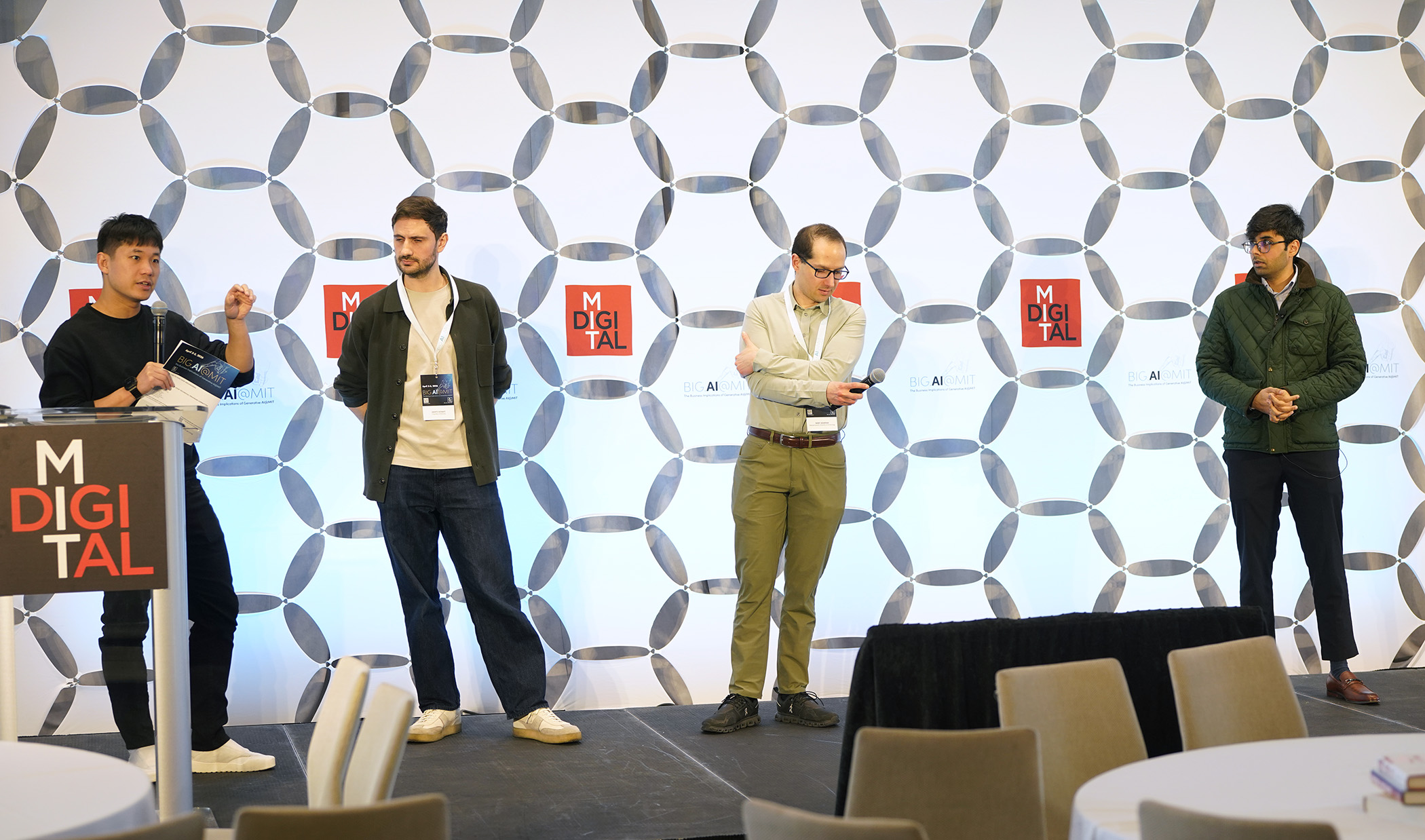
Jeremy Yang (left) leads the parallel session discussion, The Adoption and Usage of AI Agents: Early Evidence from Perplexity
BIG.AI@MIT also featured a full program of parallel research sessions. There, attendees heard directly from academics and practitioners presenting new work.
These sessions drew on research from leading universities and businesses, including MIT, Harvard, Columbia, Stanford, Yale, Northwestern, Google DeepMind, Microsoft Research and Accenture.
Sessions were organized across 15 diverse tracks, among them negotiation and strategic decisions, agent adoption and productivity, and human-agent collaboration.
The Questions That Matter
IDE Director Aral outlined the reality of AI in business today with some hard numbers:
- Nearly nine in 10 organizations (88%) already use AI for at least one business function. That’s up from just 16% as recently as 2024.
- Workers with AI skills earn a wage premium of 56%.
- Data centers now consume 1.5% of the world’s electricity. That’s projected to more than double by 2030.
Aral also reminded attendees that AI advances, impressive as they are, still involve humans working behind the scenes.
“This is not a technological revolution at its core,” he said. “This is really a socioeconomic and technical revolution. It’s about organizational processes, cognition, psychology and empathy.”
The conversations from BIG.AI@MIT are ongoing, and they’ll continue driving the work of IDE researchers.
Did you miss all or some of the conference? No worries: All public sessions are available on the IDE’s YouTube channel.